
In electrical engineering, demand factor electrical calculations represent the ratio of the maximum electrical demand of a system to its total connected load. Because building equipment rarely operates at full capacity simultaneously, applying a demand factor prevents severe oversizing of electrical services, switchgear, distribution feeders, and upstream utility infrastructure, which reduces both capital expenditure and unnecessary equipment footprint.
Understanding Demand Factor in Electrical Engineering
Connected load is the simple mathematical sum of the nameplate ratings of all electrical devices connected to a distribution system. If a small commercial shop contains twenty 1,500-watt heaters, the connected load is 30,000 watts. However, real-world facilities do not draw total connected capacity at the same instant. Thermostats cycle off, kitchen equipment idles between prep periods, and office equipment draws steady-state power well below its rating.
Maximum demand is the highest power draw recorded over an established demand interval, typically measured in 15-minute or 30-minute windows by electric utility meters. A demand factor expresses the mathematical relationship between this realistic peak and the nameplate total:
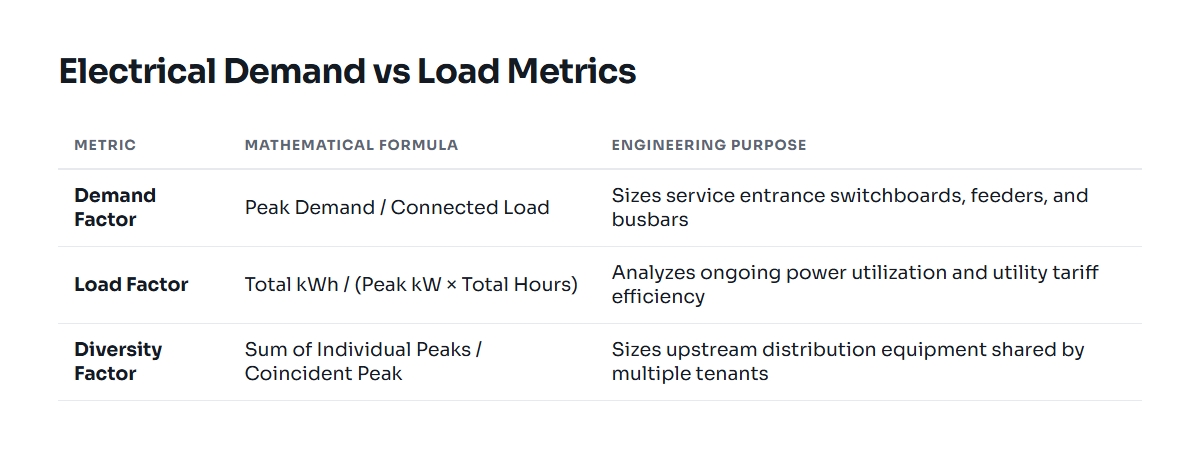
Demand Factor = Maximum Demand / Total Connected Load
A calculated demand factor is normally expressed as a decimal or percentage less than or equal to 1.0 (or 100 percent). For example, if a facility connects 200 kVA of total equipment nameplate rating but peaks at 120 kVA during its busiest operational hour, the resulting operational demand factor is 0.60, or 60 percent. In formal building services design, engineers distinguish between calculated statutory demand factors dictated by safety regulations and empirical load factors measured during ongoing facility operations.
What the Canadian Electrical Code Actually Requires
In Alberta, electrical installations must comply with the Alberta Safety Codes Act through the adopted Canadian Electrical Code Part I (CEC 2024). Service sizing and branch feeder load calculations fall directly under CEC 2024 Section 8.
The code recognises that building systems operate with diversity. CEC 2024 Section 8 establishes mandatory demand factors for different building occupancies and specific load categories, including:
- General Lighting Loads: Minimum lighting watts per square metre based on facility use (such as office, retail, school, or residential), with stepped downward demand factors for larger floor areas.
- Electric Space Heating: Application of demand factors depending on whether heating systems are controlled by individual room thermostats, programmable controls, or integrated energy management systems.
- Cooking Equipment: Allowable demand reductions for commercial kitchens, schools, and institutional dining halls based on equipment duty cycles.
- Electric Vehicle Supply Equipment (EVSE): Specific demand management rules under CEC 2024 Section 8 that permit automated load management systems (ALMS) to dynamically control multiple charging stalls on smaller upstream distribution panels.
- Receptacle Loads: Prescribed demand percentages applied to general-purpose convenience receptacles in institutional and commercial designs.
For detailed guidance on walking through an entire service calculation from service entrance conductors to individual distribution panels, read our step-by-step article on How to Perform an Electrical Load Calculation.
| Occupancy / Load Type | Primary CEC 2024 Approach | Design Impact on Service Size |
|---|---|---|
| Commercial Retail | Area watts/m² plus 100% of display and cooling loads | Moderate reduction compared to gross connected nameplate |
| Commercial Kitchen | Stepped percentage based on number of active appliances | Significant drop in switchgear amperage requirements |
| Multi-Unit Residential | Living-area baseload plus tiered EV and range factors | Prevents gross oversizing of main utility transformer |
| Office Building Lighting | Area baseload with allowable downward tiers over square-footage thresholds | Accounts for automated vacancy switching and daylight harvesting |
| Electric Vehicle Management | Dynamic load management allowed under Section 8 controls | Enables multiple chargers without costly transformer upgrades |
How Demand Factor Applies on a Real Alberta Project
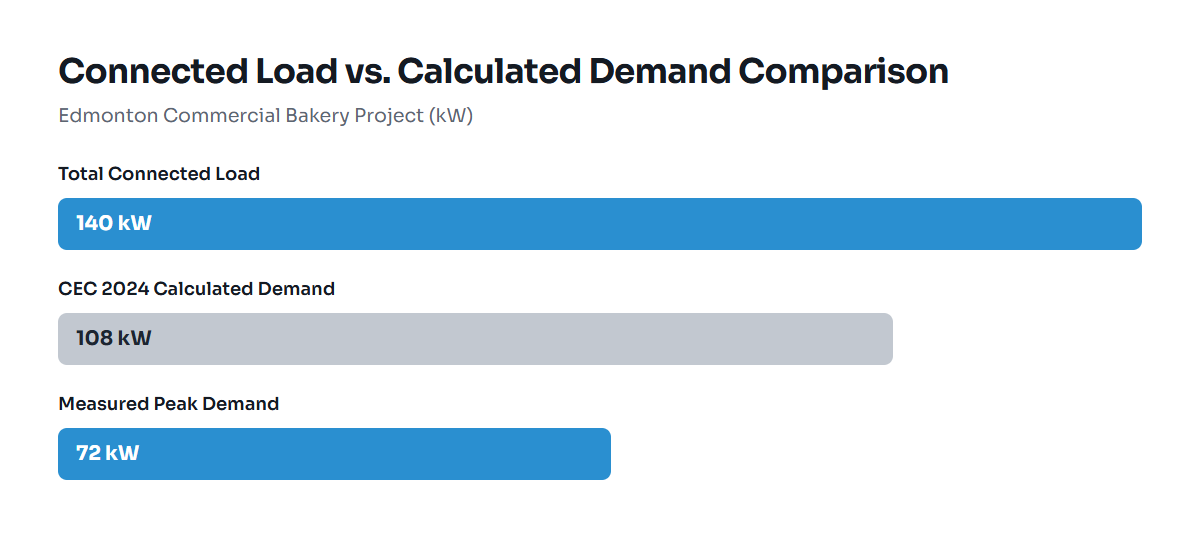
Consider an actual light-commercial tenant fit-out in Edmonton: a standalone commercial bakery and café occupying a 300-square-metre building. The owner originally added up every nameplate tag on every kitchen oven, mixer, walk-in cooler, and panel heater, presenting the contractor with a 180 kVA connected load estimate. Sizing for 180 kVA on a standard three-phase 120/208V service would require an expensive 600-amp service entrance switchboard.
By engaging licensed engineers for electrical engineering services in Alberta, an electrical load analysis applies CEC 2024 Section 8 demand factors to separate equipment categories:
- Space Heating and Ventilation: 25 kW connected. Because thermostatically controlled units cycle continuously, code rules under Section 8 permit specific demand grouping.
- Commercial Baking Equipment: 85 kW connected across four deck ovens, proofers, and planetary mixers. In food preparation facilities, diversity factors apply because not all ovens heat to full load simultaneously while mixers operate. The calculated demand drops to 55 kW.
- Refrigeration: 15 kW connected across a walk-in freezer, prep coolers, and beverage chillers. Sized at 100% for the largest compressor plus staggered demand for secondary units.
- Lighting and Convenience Outlets: 15 kW connected. General lighting density calculations for retail space under Section 8 dictate the baseline demand.
The resulting total maximum demand under CEC 2024 calculation rules totaled 108 kW (approximately 120 kVA). At three-phase 120/208V, this yields a design current of 333 amperes. Instead of a 600A service switchboard, the installation safely used a standard 400A service entrance panelboard. This single demand factor electrical optimization eliminated heavy feeder runs, avoided upstream utility transformer upgrades by EPCOR or ATCO, and shaved tens of thousands of dollars off overall installation costs.
Common Misconceptions Around Demand and Load Factors
Project managers, electricians, and facility operators frequently confuse three distinct engineering metrics: demand factor, load factor, and diversity factor. Conflating these terms leads to incorrect equipment procurement or non-compliant permit submissions.
Demand Factor vs. Load Factor
While demand factor electrical calculations compare maximum instantaneous peak demand to total connected equipment rating, load factor measures energy utilization efficiency over an extended timeframe, such as a billing cycle. To know how to calculate load factor in electrical applications, divide the total kilowatt-hours consumed in a period by the product of the maximum peak kilowatt demand and the total hours in that billing period:
Load Factor = Total Energy (kWh) / [Peak Demand (kW) × Hours in Period]
A high load factor (approaching 1.0) means an industrial plant draws energy steadily day and night, running a very flat load profile. A low load factor (such as 0.20) indicates high, brief peak spikes with low average energy use. Demand factor sizes the physical wires; load factor determines the commercial utility billing structure.
Mistaking Connected Load for Required Switchgear Capacity
Contractors occasionally order switchboards sized strictly to total connected nameplate figures. Doing so causes unnecessary material expense and introduces higher prospective short-circuit currents, necessitating more expensive breaker trip units and arc flash mitigation hardware. You can check fault scenarios using our free voltage drop and SCCR calculator.
Applying Operational Factors to Permitted Code Calculations
Another dangerous mistake is using an owner's historical electricity bill or self-measured data logger numbers directly to downsize new services without following statutory CEC 2024 calculation procedures. In Alberta municipalities like Calgary and Edmonton, commercial electrical permit plans examiners will reject calculations that do not strictly comply with CEC 2024 Section 8 rules, regardless of what an energy meter measured during a two-week field trial.
Related Requirements: Permits, Utilities, and Code Compliance
In Alberta, applying demand factors to service sizing impacts your regulatory approvals and utility interconnections:
- Commercial Electrical Permits: Municipalities like the City of Edmonton and City of Calgary require comprehensive load schedules on single-line drawings for commercial service alterations. Plan examiners inspect the explicit breakdown of connected load versus calculated demand under CEC 2024 Section 8 before issuing an electrical permit.
- Utility Connection Agreements: Alberta distribution companies (ENMAX, EPCOR, FortisAlberta, and ATCO Electric) require calculated demand submissions to reserve transformer capacity. Overstating demand through zero diversity results in costly utility system contributions or unnecessary transformer charges.
- Future Expansion Reserves: Good engineering practice requires factoring realistic tenant turnover into institutional electrical design. While code demand factors establish legal minimums, engineering specifications often dictate adding a 20 percent capacity cushion to calculated demand to avoid premature service panel replacements.
- Secondary Service Alterations: Similar considerations govern residential dwellings adding suites or heat pumps. For detailed sizing requirements on domestic services, consult our practical guide to Secondary Suite Electrical Service Upgrade Calgary.
Electrical permit processing fees and safety code levies in Alberta are set by local municipal fee schedules and the Alberta Safety Codes Council, varying with the declared installation value and physical service amperage. Ensuring accurate demand calculations keeps both switchgear capacity and municipal permit fees aligned with actual building needs.
Free tools: kVA to amps calculator